

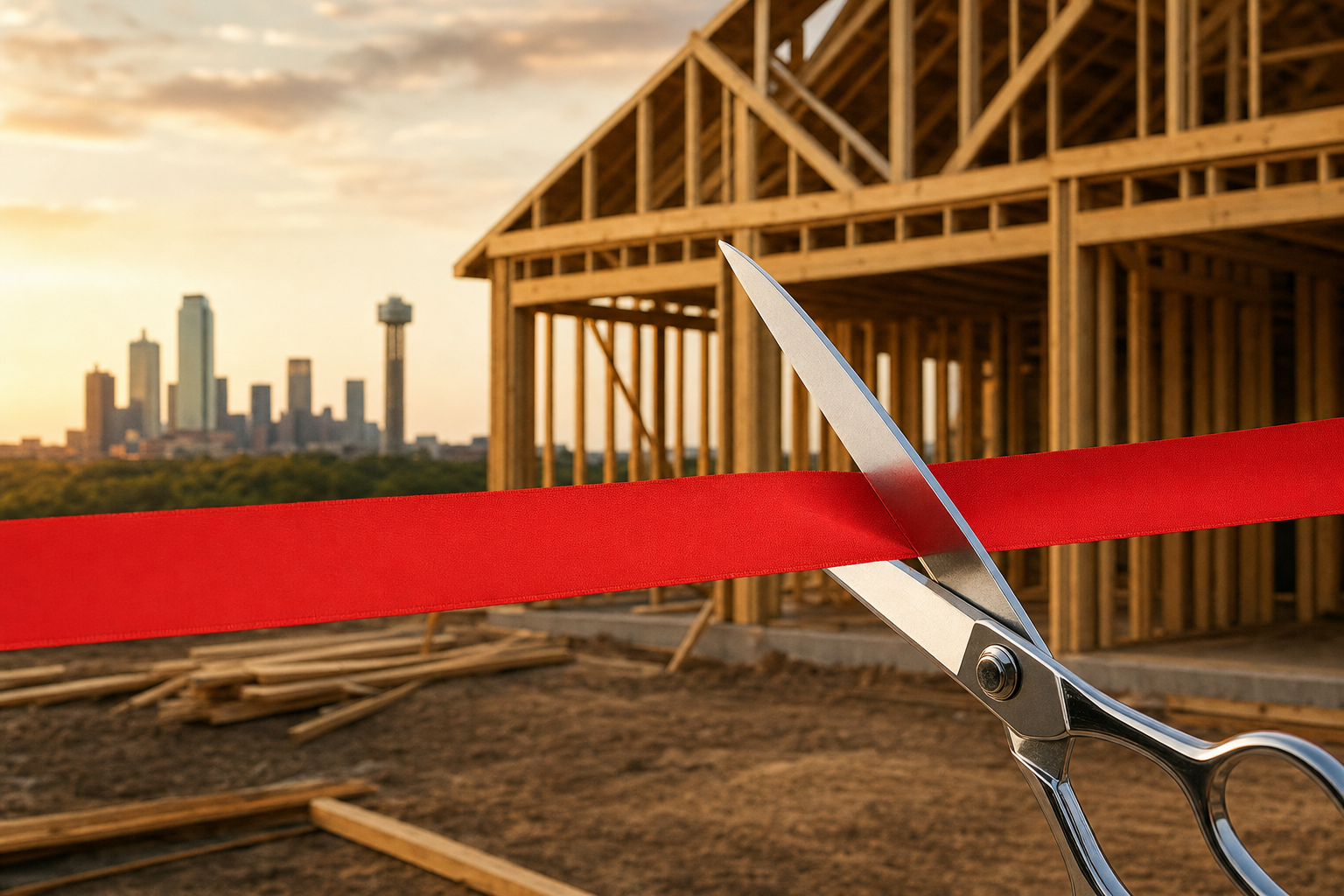
New construction looks simple from the outside: land, lumber, labor, permits, and a finished home. But behind every model home and freshly poured slab is a long chain of rules, fees, approvals, inspections, studies, tax treatment, and local infrastructure decisions that all affect the final price a buyer sees.
That hidden cost stack is getting harder to ignore. Recent housing coverage and builder research point to the same issue: regulation does not just slow projects down. It gets priced into the home.
The National Association of Home Builders recently estimated that government regulation at the federal, state, and local levels adds about $131,734 to the price of a new single-family home, or 26.4% of the average new-home sales price used in its 2026 analysis. The number is attention-grabbing, but the bigger takeaway is more practical: affordability is not driven by one single cost. It is shaped by dozens of small and large decisions that happen long before a buyer walks into a sales office.
“Cutting unnecessary red tape is not about cutting corners. It is about putting money back into the client’s pocket, making homeownership more affordable, and helping more families get into homes without paying for delays, duplication, and unnecessary fees.”
Ty Williams, RJ Williams & Co.
The Cost Is Bigger Than the Permit Fee
When people hear “red tape,” they often think of a permit fee at city hall. That is part of the story, but it is not the whole story.
Builder-side costs can include building permit fees, inspection fees, utility hook-up charges, code updates, energy standards, architectural requirements, stormwater requirements, traffic studies, and design rules that vary from one city to the next. Developer-side costs can include zoning approvals, land-use studies, public hearings, engineering requirements, site-plan revisions, infrastructure dedication, and delays while approvals move through multiple departments.
The frustrating part for builders is not always the existence of rules. Some standards are necessary. Buyers want safe homes, reliable roads, drainage that works, water capacity, fire protection, and communities that do not create new problems for existing residents. The issue is predictability.
If a builder knows the rules early, can estimate costs accurately, and can move through approvals on a dependable timeline, the market can price that risk. When requirements shift late, reviews drag out, or each municipality interprets standards differently, the cost becomes harder to control. That uncertainty eventually lands in the price of the home.
Time Is a Cost, Too
In real estate development, time is not just inconvenient. It is expensive.
A delay can mean additional interest on development loans, extended carrying costs on land, more consultant time, revised engineering work, updated material pricing, and missed selling seasons. For smaller builders, delays can be even more painful because they do not always have the balance sheet to absorb months of uncertainty.
This is where the affordability conversation gets real. A buyer may never see a line item that says “six-month entitlement delay,” but the cost can still be baked into the lot, the base price, the premium, or the builder’s willingness to offer incentives.
That is also why builder groups have pushed for reforms that streamline permitting, modernize appraisal and credit rules, reduce unnecessary duplication, and encourage faster residential development approvals. Whether those reforms come from Washington, Austin, county offices, or city councils, the practical goal is the same: make it easier to deliver homes without compromising safety or basic infrastructure.
Texas Has Its Own Cost Equation
Texas is often viewed as a pro-growth state, but growth still has to be paid for. Roads, water, wastewater, drainage, and other infrastructure do not appear automatically when a new community is announced.
That is where impact fees come in.
The Texas Real Estate Research Center explains that impact fees are charges imposed on new development to help fund infrastructure needed to serve that development. Under Chapter 395 of the Texas Local Government Code, those fees are generally tied to capital improvements for roadways, water, wastewater, and stormwater or drainage infrastructure. They are not meant to cover normal ongoing operations, and they are not a blank check for every public service a city may want.
In theory, impact fees answer a fair question: should existing taxpayers pay all the upfront infrastructure costs created by new growth, or should new development carry a share of that burden?
In practice, the answer gets complicated.
If impact fees are too low, cities may struggle to fund roads, utilities, and drainage improvements needed for growth. If fees are too high, new homes become more expensive, and builders may reduce supply, shift projects elsewhere, or target higher price points to make the numbers work. Either way, buyers feel it.
“Housing affordability is about access. Families should not be priced out of homeownership because of unnecessary costs, delays, or layers of red tape. If we want to keep housing affordable and accessible, we have to put the focus back on families — not fees.”
Carmen Murillo-Williams, RJ Williams & Co.
Tax Treatment Matters More Than Buyers Realize
Texas tax rules also shape how construction costs are handled. The Texas Comptroller notes that labor for new construction is generally not taxable, including building new structures, completing unfinished structures, and initial finish-out work. Under lump-sum contracts, contractors typically pay tax when buying supplies, materials, equipment, and taxable services, then do not charge the customer tax separately. Under separated contracts, tax treatment can differ for materials and certain separately stated services.
That may sound technical, but it matters because tax treatment affects bids, contracts, allowances, and how costs are passed through. For builders and contractors, the structure of the agreement can change how they price the job. For buyers and investors, it is a reminder that the final cost of a home is not just materials plus labor. It is materials, labor, tax rules, contract structure, local fees, infrastructure requirements, financing costs, and time.
The Real Buyer Takeaway
The easy headline is that red tape adds cost. The more useful takeaway is that not all costs are equal.
Some rules protect buyers and neighboring property owners. Drainage, structural standards, utility capacity, fire access, and inspection requirements exist for a reason. But unnecessary duplication, inconsistent local rules, slow permitting, unclear design mandates, and unpredictable approval timelines make homes more expensive without necessarily making them better.
For buyers, this means new construction pricing should be evaluated with more context. A base price is only the starting point. Lot premiums, upgrades, municipal requirements, utility fees, builder incentives, rate buydowns, tax rates, MUD or PID assessments, HOA dues, and timing can all change the true cost of ownership.
For builders, the message is straightforward: markets reward clarity. The communities that can approve responsible development faster, explain their infrastructure costs clearly, and apply standards consistently will have an advantage in delivering housing supply.
For local leaders, affordability is no longer just a demand-side issue. It is a production issue. If a city wants teachers, first responders, young families, downsizers, and local workers to live near the places they serve, the cost of producing housing has to be part of the policy conversation.
Cutting the Red Tape Without Cutting Corners
The goal should not be to remove every rule. The goal should be to cut the rules that add delay, uncertainty, and cost without adding real value.
Texas can keep building. North Texas can keep growing. But if the region wants more attainable new-home options, everyone involved has to look beyond the sticker price and ask what is driving it.
Red tape is not just paperwork. It is time. It is interest. It is infrastructure. It is risk. And in a market where every dollar affects affordability, cutting unnecessary friction may be one of the most practical ways to help more buyers get into a new home.
This article is for general real estate education and is not financial, legal, tax, or investment advice. Sources: New York Post / Realtor.com coverage of NAHB’s regulatory cost estimate; NAHB summary of executive orders on affordability and regulatory barriers; Texas Comptroller guidance on real property repair, remodeling, and new construction; Texas Real Estate Research Center report on impact fees and new development costs.
Explore the full article archive
Browse more RJ Williams & Company articles on buyer strategy, seller guidance, broker responsibility, market updates, commercial real estate, land, investing, and new construction.