

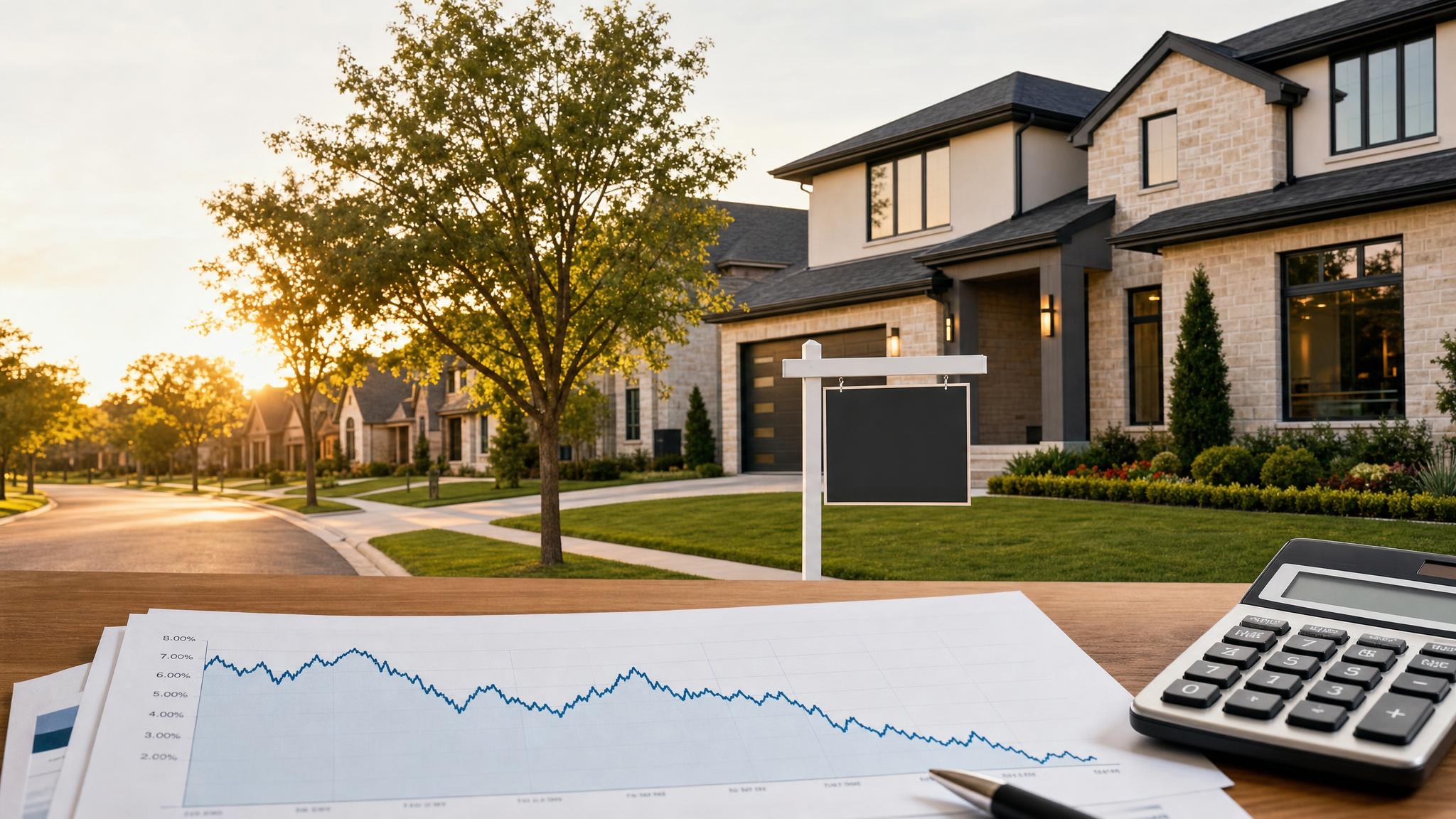
Mortgage rates are still doing what they have done for most of the last few years: keeping buyers alert, cautious, and focused on the monthly payment.
Two current market signals explain why. Investors are watching Federal Reserve Chair Kevin Warsh's first Jackson Hole speech for clearer direction on inflation and interest-rate policy. At the same time, the Mortgage Bankers Association reported that mortgage applications decreased in its latest weekly survey, a reminder that affordability is still shaping buyer behavior even when rates move only slightly from week to week.
For buyers and sellers in North Texas, the lesson is not to freeze until rates become perfect. It is to understand how rates affect the deal, then build a plan around the full picture.
Why rate clarity matters
Mortgage rates do not move only because the Fed makes one announcement. They respond to inflation expectations, Treasury yields, lender pricing, investor demand for mortgage-backed securities, and overall confidence in the economy. That is why a Fed speech can matter even before an actual rate decision. Markets are listening for tone, discipline, and clues about whether inflation is cooling enough to ease pressure on long-term rates.
Freddie Mac's latest weekly survey showed the average 30-year fixed-rate mortgage at 6.65% as of August 20, 2026. That is lower than the prior week, but still high enough to keep monthly payment strategy front and center for most buyers.
When rates are in this range, small changes matter. A buyer's comfort level can shift quickly based on loan structure, taxes, insurance, HOA dues, closing costs, and how much help the seller or builder is willing to offer.
Why mortgage applications are soft
The latest MBA survey showed total mortgage applications down 1.0% from the prior week. That does not mean buyers have disappeared. It means many buyers are selective. They are checking payments carefully, comparing lenders, and waiting for enough value to justify moving forward.
That is a rational response. A higher-rate market makes people more disciplined. It also creates a different kind of opportunity. Homes that are priced too aggressively may need to adjust. Sellers may be more open to closing-cost help. Builders may offer incentives. Buyers may have more room to negotiate than they had during the most competitive parts of the market.
"The best deal is not always the lowest rate. In a higher-rate market, buyers need to look at the whole package: price, concessions, lender options, timing, and whether the home still makes sense for their long-term plan."
Ty Williams, Broker and Founder of RJ Williams & Company
What buyers should do now
Buyers should start with the payment, not the headline. A quoted interest rate is only one piece of the decision. The better question is: what does this home cost each month after taxes, insurance, mortgage insurance, HOA dues, and closing costs?
From there, buyers should compare more than one lender. A small difference in rate, fees, credits, or buydown options can change the real cost of the loan. They should also ask whether a temporary buydown, permanent buydown, seller credit, builder incentive, or price negotiation creates the stronger outcome.
In some cases, a slightly higher rate with the right concession can work better than waiting months for a rate drop that may or may not arrive. In other cases, patience is the right move. The point is to run the numbers instead of guessing.
What sellers should understand
Sellers need to respect the payment pressure buyers are feeling. A buyer may like the home and still hesitate if the payment stretches too far. That means pricing, presentation, and negotiation strategy matter more than they did when demand was running hotter.
A strong listing strategy may include sharper pricing from day one, cleaner property preparation, better photography, practical repair positioning, or a concession plan that helps the buyer solve the payment problem. Sometimes that concession can protect the seller's net better than a direct price cut. Sometimes the price needs to move. The right answer depends on the home, the competition, and the buyer pool.
The RJ view
Rate headlines are useful, but they should not replace local guidance. North Texas is not one market. Fort Worth, Dallas, Arlington, Mansfield, Frisco, Denton, Burleson, Midlothian, and the surrounding communities can all behave differently depending on price point, inventory, school district, commute pattern, and new-construction competition.
The buyers who do best in this market are prepared before they find the house. The sellers who do best understand that affordability is part of the negotiation. And the best real estate decisions usually come from looking at the whole deal, not chasing one perfect number.
If you are thinking about buying or selling in Dallas-Fort Worth, RJ Williams & Company can help you compare the options, understand the payment, and build a strategy around today's market instead of waiting on headlines to make the decision for you.
This article is for general real estate education and is not financial, legal, tax, or investment advice. Sources: Google AI Mode shared market prompts reviewed August 26, 2026; The Wall Street Journal, "The Fed Chairman Is Heading to Jackson Hole Without a Clear Stance on Inflation"; Mortgage Bankers Association, "Mortgage Applications Decrease in Latest MBA Weekly Survey" published August 26, 2026; Freddie Mac, "Primary Mortgage Market Survey."
Explore the full article archive
Browse more RJ Williams & Company articles on buyer strategy, seller guidance, broker responsibility, market updates, commercial real estate, land, investing, and new construction.