

The housing market is not frozen. Homes are still selling, buyers are still moving, and well-prepared listings can still perform.
But the market is more selective than it was a few years ago. Sellers who price like buyers have no choices are usually the ones who end up sitting, cutting, and negotiating from a weaker position later.
The reason is simple: there are more sellers competing for fewer active buyers.
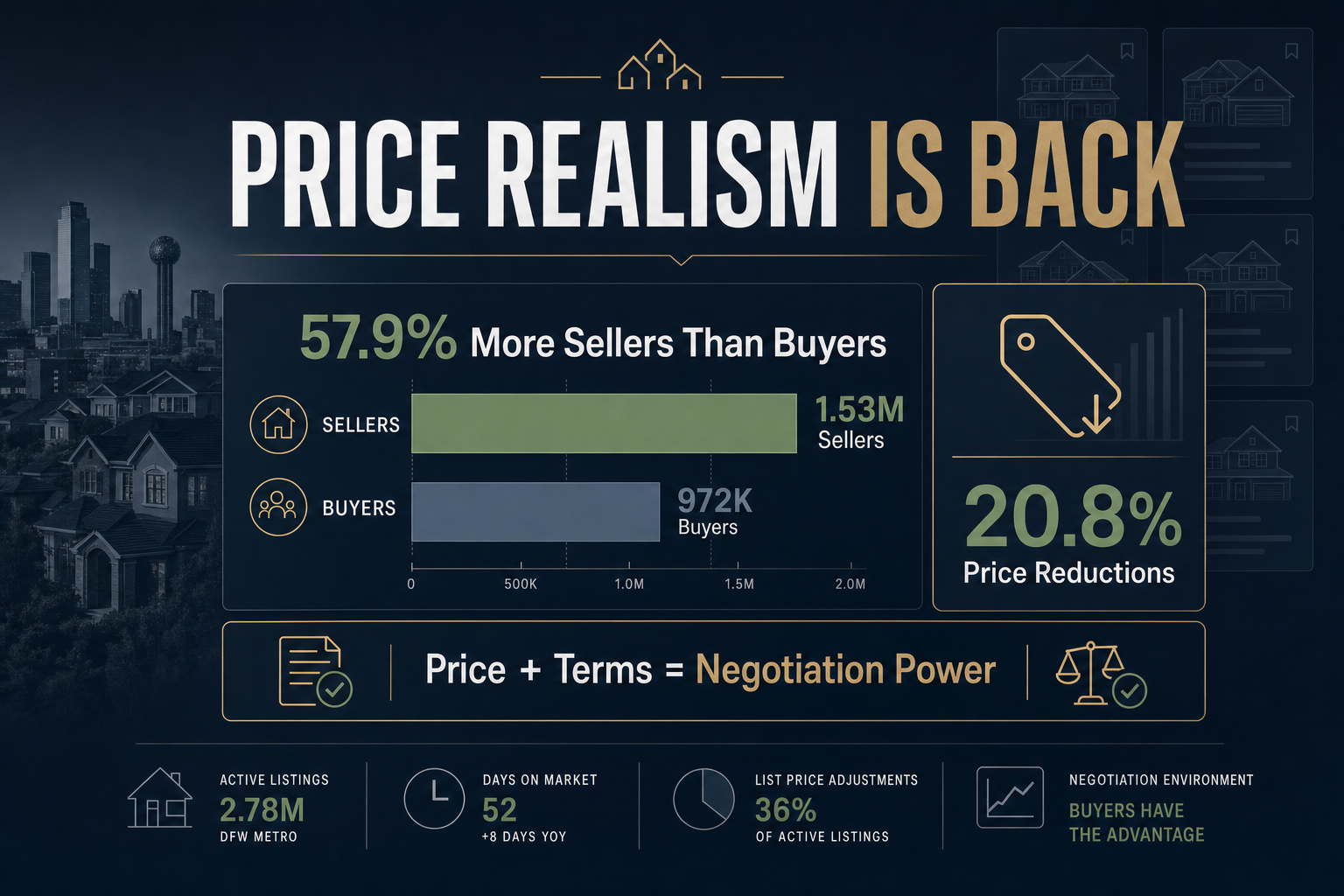
Redfin estimated that sellers outnumbered buyers by 57.9% in August, with about 1.53 million sellers compared with roughly 972,300 buyers. Realtor.com also reported that 20.8% of active listings had a price reduction in September, the highest September reading since 2018. NAR reported that existing-home sales fell 2.0% in August as higher mortgage rates continued to weigh on buyer activity.
That combination changes the pricing conversation.
Pricing is not just about what a seller wants to net. It is not just about what a neighbor sold for two years ago. It is not even only about what an online estimate says. Pricing is about how your home compares to the other options a qualified buyer can choose from today.
When buyers have more choices, they compare harder. They look at the payment, condition, days on market, repairs, concessions, and what else is available nearby. If a home is priced ahead of the market, many buyers do not negotiate first. They simply move on.
Why the First Price Matters
For several years, many sellers could test a high price and wait for the market to catch up. That worked when inventory was tighter, rates were lower, and buyers felt pressure to compete.
That strategy is much weaker now.
A home that starts too high can lose its best audience in the first two weeks. The most motivated buyers see it, decide it is overpriced, and keep shopping. After that, the seller may need a price reduction just to get attention again. By then, the listing can look stale even if nothing is wrong with the property.
Smart pricing is not about being cheap. It is about being positioned correctly.
The right list price should create showings, feedback, and leverage. The wrong price gives buyers a reason to wait.
Buyer Count Versus Seller Count
The buyer count versus seller count matters because it tells you who has more options.
If five sellers are trying to reach the same buyer, the buyer gets to compare. One home may be cleaner. One may be priced better. One may offer a better concession. One may include appliances, closing cost help, or a repair credit that makes the deal easier to say yes to.
That does not mean sellers have no power. It means seller power has to come from strategy, not wishful pricing.
In this market, leverage usually comes from three places: accurate pricing, strong presentation, and smart negotiation.
The 1-2 Negotiation Strategy
One of the biggest mistakes sellers make is thinking negotiation only means the final sales price.
Price matters, but it is only one lane of the deal. A stronger approach is what I call the 1-2 negotiation strategy:
- Negotiate the sales price.
- Negotiate the terms, concessions, and add-ons.
That second lane can make a real difference.
In a higher-rate market, buyers are often focused on monthly payment and cash needed to close. A seller who understands that can negotiate with more creativity.
Instead of only asking, "How much do we need to cut the price?" sellers should also ask:
- Would a closing cost credit help the buyer get comfortable?
- Would a rate buydown create more value than a price cut?
- Would leaving appliances help the offer come together?
- Would a repair credit solve the buyer's biggest objection?
- Would an upgrade allowance make the home feel more move-in ready?
- Would flexible closing or possession terms matter more than another price move?
This is where negotiation can protect a seller's bottom line.
A price cut reduces the contract number immediately. A concession may solve the buyer's real concern while keeping the sales price stronger. In some cases, a refrigerator, washer and dryer, appliance package, flooring allowance, repair credit, home warranty, rate buydown, or closing cost contribution can move the deal forward without giving away more than necessary.
The key is knowing what problem the buyer is trying to solve.
Some buyers need help with cash to close. Some need confidence after inspections. Some need a lower monthly payment. Some want the home to feel move-in ready. Those are different problems, and they should not all be solved the same way.
A Seller Should Know the Playbook Before Listing
Before a home goes live, sellers should know where they stand.
That means reviewing recent closed sales, active competition, pending listings, price reductions, days on market, showing activity, and the likely buyer profile for the home. It also means deciding ahead of time what is negotiable.
That does not mean giving everything away. It means knowing the plan before the first offer comes in.
One seller may be better off holding closer to price and offering closing cost help. Another may benefit from a clean price adjustment. Another may need to solve condition issues before listing so buyers do not use those items against them later.
The right strategy depends on the property, the competition, and the buyer pool.
"The biggest mistake a seller can make right now is pricing like it is still 2021. Buyers are not gone, but they are sharper. They are looking at the payment, the condition, the competition, and the concessions. The goal is not just to negotiate price. The goal is to negotiate the full deal: sales price, closing costs, repairs, appliances, upgrades, and anything else that can help both sides get to the finish line without giving away more than necessary."
Ty Williams, RJ Williams & Company
Bottom Line
Today's market is not punishing every seller. It is punishing sellers who ignore buyer reality.
There are more sellers competing for fewer active buyers. More listings are taking price reductions. Mortgage rates are still shaping what buyers can afford. In that kind of market, sellers need more than a sign in the yard and a hopeful price.
They need accurate pricing, clean presentation, and a negotiation plan that uses both lanes of the deal: price and terms.
RJ Williams & Company helps sellers price with confidence, prepare with purpose, and negotiate from a stronger position.
This article is for general real estate education and is not legal, financial, tax, lending, or investment advice. Sources: Realtor.com, September 2026 Monthly Housing Trends Report; Redfin, August 2026 buyers-vs-sellers report; National Association of REALTORS®, August 2026 Existing-Home Sales; Freddie Mac, Primary Mortgage Market Survey.
Explore the full article archive
Browse more RJ Williams & Company articles on buyer strategy, seller guidance, broker responsibility, market updates, commercial real estate, land, investing, and new construction.